When milk production stalls, the first instinct is often to change ingredients. Add more grain. Swap a supplement. Push energy harder. Sometimes that works but more often, it adds noise without fixing the real problem.
Evaluating a dairy cow diet starts with slowing down and looking at how the ration is actually performing in the cow, not just how it looks on paper. Many diets technically meet nutrient targets and still underdeliver because something in execution, intake, or digestion is off.
The good news? Most stalled milk situations leave clues.
Start with intake, not ingredients
Before adjusting a single ingredient, look at intake. Dry matter intake drives everything that follows. If cows aren’t eating consistently, no diet formulation will perform as intended.
Questions to ask:
- Has intake changed day to day?
- Are refusals increasing or sorting becoming more obvious?
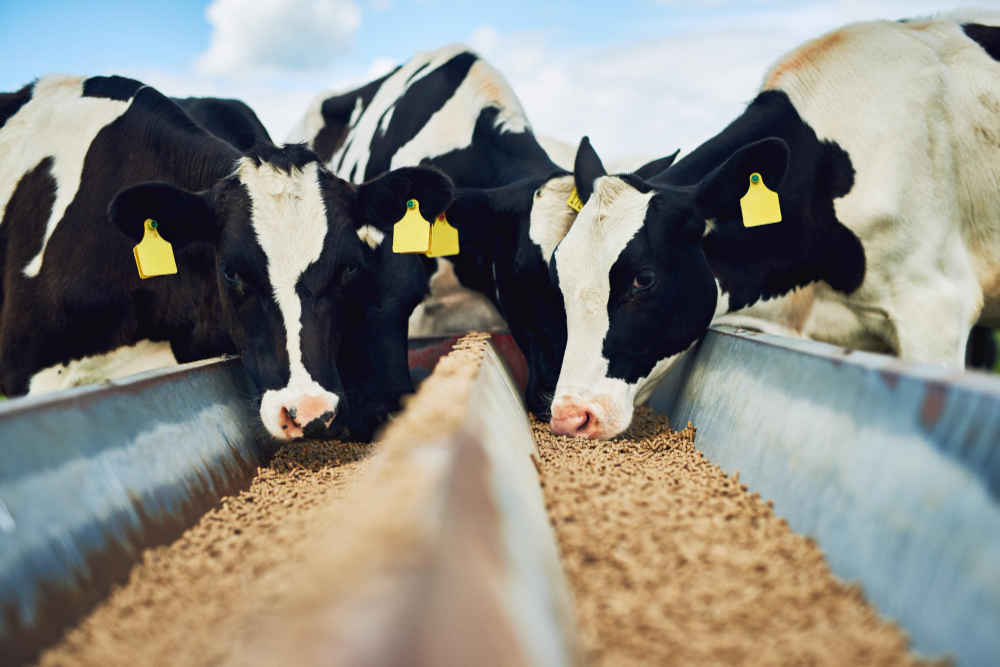
- Do cows spend less time at the bunk than they used to?
Even small intake drops can explain a surprising amount of lost milk. Evaluating a dairy cow diet without understanding intake is like troubleshooting an engine without checking fuel supply.
Watch the cows, not just the numbers
One of the most overlooked steps in dairy cow feeding evaluation is observation. Cows communicate diet problems long before milk tanks do.
Look for:
- Reduced cud chewing
- Loose or inconsistent manure
- Undigested grain or fiber
- Changes in cow behavior at the bunk
These signs often point to rumen stress or inefficient digestion. When digestion suffers, energy supply drops even if the ration looks balanced on paper.
Recheck forage reality
Forage is the foundation of most dairy cow diets, and it’s also the most variable ingredient. Changes in dry matter, digestibility, or processing can quietly shift energy intake without triggering alarms.
Ask yourself:
- Has forage dry matter changed recently?
- Are we feeding the same silage face consistently?
- Has chop length or processing quality drifted?
A diet formulated for one forage profile may underperform when the forage changes. Evaluating the dairy cow diet means confirming that today’s ration still matches today’s forage—not last month’s numbers.
Evaluate energy before protein
When milk stalls, protein often gets blamed. In reality, energy is the more common bottleneck.
If cows lack fermentable energy, rumen microbes underperform. That reduces microbial protein production and limits milk response even if protein levels look adequate.
Signs energy may be limiting include:
- Milk plateau without major ration changes
- Declining body condition
- Flat or declining components
Before adding protein, confirm that energy supply and utilization are supporting microbial activity.
Check for ration consistency
Many diets fail not because of what’s in them, but because of how consistently they’re delivered. Mixing accuracy, feeding time, and ingredient sequencing all influence what cows actually consume.
Small inconsistencies can cause:
- Intake swings
- Sorting behavior
- Day-to-day milk variation
When evaluating a dairy cow diet, consistency often matters more than chasing marginal nutrient tweaks.
Avoid the “one more ingredient” trap
It’s tempting to solve stalled milk by adding another ingredient. Sometimes supplements are appropriate but only after the basics are confirmed.
If intake, forage consistency, rumen function, and feeding management aren’t aligned, adding complexity rarely fixes the issue. It often makes it harder to identify what’s actually working.
Strong cow diet formulation starts with clarity, not clutter.
Make targeted, measurable changes
Once problem areas are identified, changes should be intentional and measured. Adjust one variable at a time and watch cow response.
Milk, intake, and manure often respond within days when the right lever is pulled. When everything changes at once, it’s impossible to know what actually helped.
The goal isn’t to constantly change the dietit’s to get the diet working consistently again.
If milk has stalled and the cause isn’t clear, a structured review can help identify where performance is being lost. Submitting a ration form allows a 1on1 Nutrition specialist to evaluate intake, forage, and feeding consistency with real herd data.
A better way to evaluate dairy cow feeding
The most effective diet evaluations combine formulation knowledge with on-farm observation. They consider what cows are eating, how they’re eating it, and how their bodies are responding.
That approach prevents overcorrection and helps restore milk performance without creating new problems.
FAQs: Evaluating a Dairy Cow Diet
Why does milk stall even when the ration hasn’t changed?
Forage variability, intake shifts, heat stress, or digestion issues can reduce performance even if the ration formula stays the same.
Should protein be increased when milk stalls?
Not automatically. Energy limitations and rumen inefficiency are more common causes than protein deficiency.
How quickly should cows respond to diet changes?
When the right issue is addressed, intake and milk response often improve within several days. Lack of response may signal the wrong lever was pulled.
Can feeding consistency affect milk production?
Yes. Inconsistent mixing, delivery timing, or ingredient inclusion can cause intake swings that reduce milk output.
When should a diet be professionally reviewed?
If milk stalls without a clear reason, or small changes keep producing unpredictable results, an outside review can help identify blind spots.
If milk production has plateaued and diet changes haven’t delivered results, it may be time for a fresh evaluation. Connect with a 1on1 Nutrition specialist to review intake, forage performance, and feeding consistency and identify where targeted adjustments can help get milk moving again.