Milk production problems rarely show up overnight. More often, they creep in slowly slightly lower intake, uneven components, cows that just don’t seem to hold production the way they used to. When that happens, dairy cow nutrition is usually part of the story, even if it’s not the obvious one.
At its simplest, dairy cow nutrition is about meeting cow nutrition requirements every day, not just on paper. The challenge is that cows don’t eat formulations they eat feed under real conditions. Heat, forage variability, bunk management, and palatability all influence whether a nutrition program actually works.
After working with a wide range of herds, one thing becomes clear: consistency beats complexity almost every time.
What “good” dairy cow nutrition really means
Strong dairy cow nutrition starts with balance, but balance alone isn’t enough. Cows need nutrients delivered in a way that supports intake, digestion, and long-term performance.
Energy is the first limiting factor for most high-producing herds. If energy supply doesn’t match demand, cows compensate by mobilizing body reserves. That may work short term, but it shows up later as inconsistent milk, metabolic stress, and poorer reproduction.
Protein supports milk synthesis, but more protein does not automatically mean more milk. The balance between rumen-degradable protein and bypass protein affects microbial activity and milk components. Overfeeding protein wastes money and can stress the cow. Underfeeding it caps production.
Fiber is what holds the system together. Effective fiber supports rumination, saliva production, and stable rumen pH. When fiber quality drops or particle length changes, intake often follows—and milk goes with it.
A dairy nutrition program works when these pieces support each other instead of competing.
Why cow nutrition requirements aren’t enough on their own
Most rations meet cow nutrition requirements on paper. Yet many still underperform. The gap usually isn’t formulation, it’s execution.
Common issues include:
- Variations in forage dry matter that aren’t adjusted for
- Feed sorting that changes the ration cows actually consume
- Heating or spoilage at the bunk
- Inconsistent mixing or delivery timing
Each issue may seem minor, but together they create daily intake swings. Those swings show up as milk inconsistency, component volatility, and cows that never quite reach their potential.
This is where experience matters. Nutrition programs that work in the field are built with real-world variability in mind.
Intake is the foundation of consistent milk
You can’t fix dairy cow nutrition without addressing intake. When cows don’t eat consistently, no nutrient package performs the way it should.
Strong intake usually looks like:
- Similar feed disappearance day to day
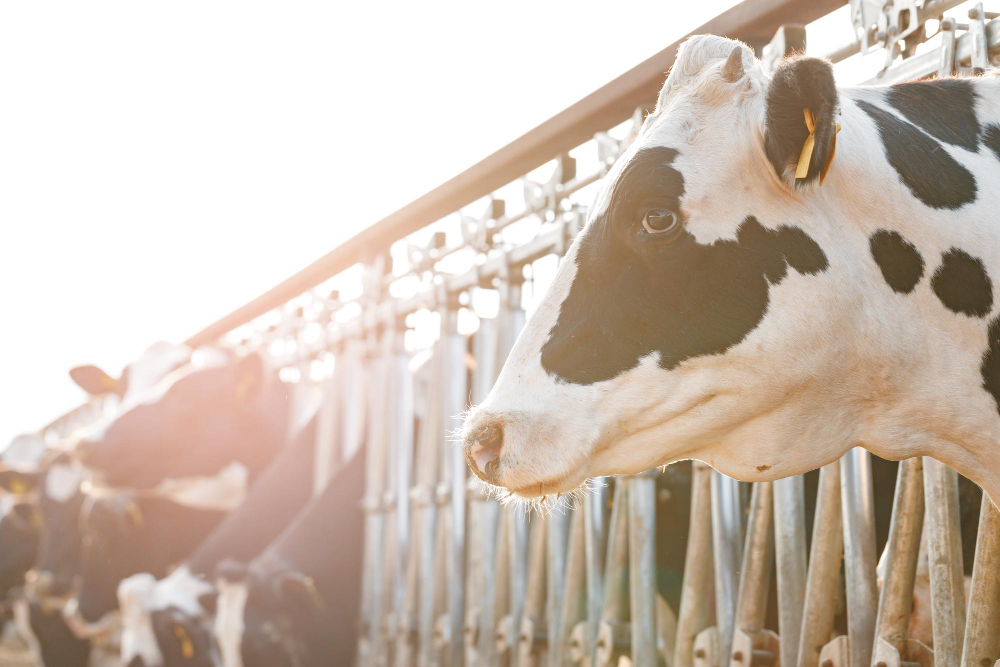
- Minimal sorting at the bunk
- Steady rumination and cud chewing
- Manure that reflects good digestion, not excess starch or fiber
When intake falters, chasing nutrients rarely fixes the problem. Fixing access, palatability, and consistency often does.
The role of forage in a dairy nutrition program
Forage quality sets the ceiling for performance. Even the best supplements can’t fully compensate for poor forage digestibility or inconsistent silage management.
Changes in forage maturity, processing, or storage can alter energy availability without obvious visual cues. That’s why forage testing and observation matter just as much as ration numbers.
A strong dairy nutrition program adapts as forage changes. It doesn’t assume last month’s ration will perform the same this month.
Consistency creates predictable milk
When dairy cow nutrition is working, herds tend to show:
- Stable dry matter intake
- Predictable milk response to ration changes
- Fewer metabolic surprises
- Better persistency across lactation
Milk becomes easier to manage because cows aren’t constantly reacting to nutritional stress.
That doesn’t mean nutrition never changes. It means changes are intentional, measured, and based on cow response not guesswork.
Nutrition is a system, not a product
One of the biggest mistakes farms make is looking for a single ingredient to fix nutrition problems. Dairy cow nutrition works best as a system: forage, energy, protein, fiber, minerals, and management all pulling in the same direction.
When something isn’t working, the solution is rarely to “add one more thing.” More often, it’s stepping back and asking whether the current program still matches what the cows are experiencing today.
That’s how consistent milk is built one stable day at a time.
FAQs: Dairy Cow Nutrition
What is the most important part of dairy cow nutrition?
Energy intake is often the most limiting factor. Without adequate, usable energy, cows can’t sustain milk production even if other nutrients are balanced.
How often should a dairy nutrition program be evaluated?
At minimum, nutrition programs should be reviewed whenever forage changes, milk response shifts, or intake becomes inconsistent. Regular check-ins help prevent small issues from becoming big ones.
Can a ration meet cow nutrition requirements but still fail?
Yes. Rations can look correct on paper but underperform due to intake issues, sorting, forage variability, or bunk management problems.
How does fiber affect milk production?
Effective fiber supports rumination and stable rumen pH. When fiber quality or length drops, intake often decreases, leading to lower milk and component changes.
Why is consistency so important in dairy cow nutrition?
Cows respond poorly to daily variation. Consistent intake and digestion lead to predictable milk production and fewer metabolic issues over time.
If milk consistency is slipping or intake doesn’t look the way it should, it may be time for a fresh look at your nutrition program. Connect with a 1on1 Nutrition specialist to review what your cows are actually experiencing at the bunk and where small adjustments can make a measurable difference.