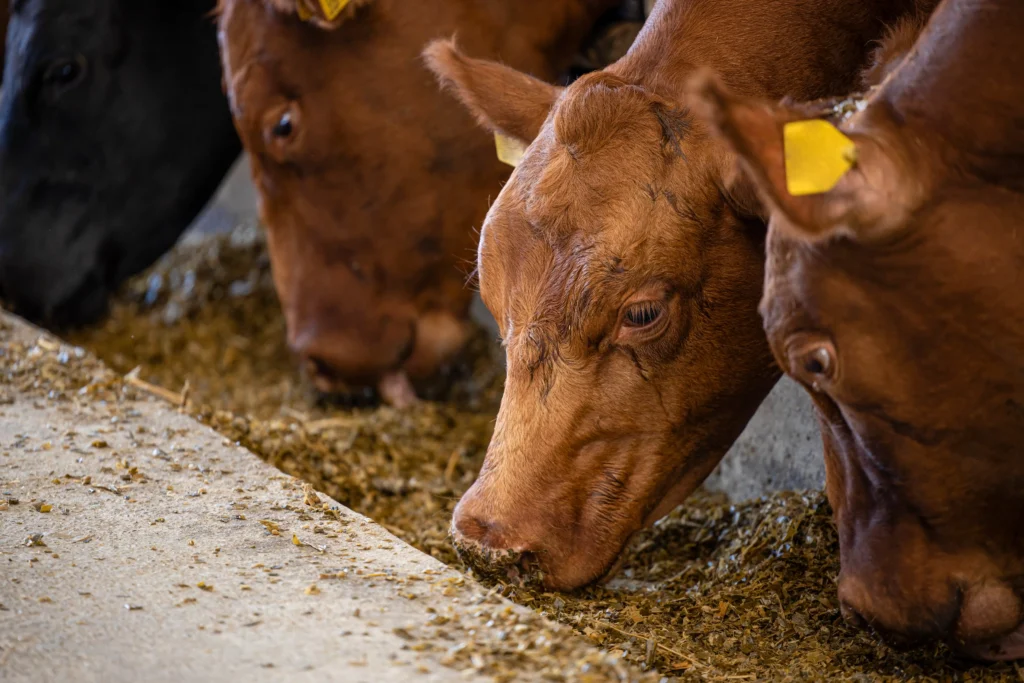
Signs your cattle ration is costing you money? Are you feeding your cattle the right ration—or quietly losing money every day without realizing it? Most producers watch feed costs closely. But the real issue is not always what feed costs on paper—it’s whether the ration is delivering returns.
A ration can look affordable and still be costing money every day through poor efficiency, inconsistent gains, lower milk output, health problems, or wasted ingredients.
That’s why successful operations focus on feed value, not just feed price.
At 1 on 1 Nutrition, we help producers identify where performance is being left on the table and how better ration strategy can improve profitability.
What Makes a Ration Expensive?
The most expensive ration is often the one that underperforms.
If animals are not converting feed efficiently, then lower ingredient cost does not necessarily equal better margins.
The true cost of a ration includes:
- Feed conversion
- Production response
- Animal health
- Ingredient waste
- Labor efficiency
- Consistency of results
A cheaper ration that loses performance can become very expensive.
Warning Signs Your Ration Needs Attention
1. Performance Has Plateaued
If milk production, average daily gain, or body condition has stalled, nutrition deserves a closer look.
Sometimes operations get used to “good enough” numbers that could actually be improved with smarter balancing or ingredient changes.
2. Feed Refusals Are High
Large refusals, sorting, or inconsistent bunk cleanup often signal problems with palatability, particle size, moisture, or mixing consistency.
If cattle don’t want to eat it evenly, results usually suffer.
3. Animals Look Inconsistent
When one group has too much variation in condition or performance, the ration may not be meeting the needs of the herd consistently.
Uniformity matters in both beef and dairy systems.
4. Health Problems Keep Showing Up
Repeated digestive upset, acidosis concerns, poor manure consistency, or transition struggles can sometimes trace back to nutritional imbalances.
Feed should support health, not work against it.
5. Too Much Purchased Feed Dependency
Many farms already have valuable forage or grain resources available. If outside feed purchases keep rising without matching returns, it may be time to reevaluate how homegrown feed is being used.
1 on 1 Nutrition emphasizes practical use of local forages and grains when possible.
How to Fix It
Start With Real Data
Good decisions come from facts, not guesses. Review:
- Production numbers
- Dry matter intake
- Feed costs
- Ingredient analysis
- Body condition trends
- Manure observations
- Reproduction metrics
Patterns often reveal where profit leaks are happening.
Reevaluate Ingredient Roles
Sometimes the issue is not one bad ingredient—it’s how the full ration works together.
Questions worth asking:
- Is energy density appropriate?
- Is fiber effective?
- Are protein sources balanced?
- Is the ration consistent daily?
- Are additives being used strategically?
Small adjustments can create meaningful returns over time.
Focus on Efficiency, Not Complexity
More ingredients do not always mean a better ration. In many cases, simpler and more consistent programs outperform overly complicated ones.
The goal is a ration cattle perform on reliably.
Work With a Nutrition Specialist
Outside perspective matters. It is easy to normalize inefficiencies when you see the same numbers every day.
A qualified nutrition review can uncover issues that are hard to spot internally and help align the ration with business goals.
Why Producers Choose 1 on 1 Nutrition
1 on 1 Nutrition has decades of livestock consulting experience and works with producers across North America. Their approach focuses on practical solutions, efficient use of available feed resources, and measurable results—not generic one-size-fits-all recommendations.
Final Thoughts
Feed is usually one of the largest costs on the farm. That means even small improvements in ration performance can create meaningful financial gains.
If your herd has plateaued, feed costs keep rising, or results feel inconsistent, it may be time to take a fresh look at the ration.
Contact 1 on 1 Nutrition to review your program and build a smarter path forward.